If your skin suddenly stings when you apply moisturizer, feels tight all day and looks red or flaky, you may need to repair your skin barrier. The good news is that a damaged barrier usually bounces back once you stop what's irritating it and give it a short, gentle routine. This guide covers the signs, the most common causes, the ingredients that help and how long recovery really takes.
Key takeaways
- Your skin barrier is the outermost layer of skin that keeps water in and irritants out.
- Over-exfoliating, harsh cleansers and stacking strong actives are the most common causes of damage.
- Recovery means pausing actives and using a gentle cleanser, a barrier-supporting moisturizer and daily sunscreen.
- Mild damage often improves within a few weeks; see a dermatologist if it doesn't.
In this guide
What is the skin barrier?
Your skin barrier is the top layer of your skin, called the stratum corneum. It's often described as a brick wall: skin cells are the bricks, and a mix of lipids (ceramides, cholesterol and fatty acids) is the mortar holding them together.
When that wall is intact, it holds moisture in and keeps irritants, allergens and microbes out. When it's damaged, water escapes more easily and ingredients that never bothered you before can suddenly sting. That's why barrier health matters for every skin type, whether you have oily, dry or combination skin.
What are the signs of a damaged skin barrier?
The most common signs are stinging or burning when you apply products, tightness, redness and rough or flaky patches. Many people also notice their skin looks dull, feels dry yet oily at the same time, or starts breaking out more than usual.
- Products you've used for months suddenly sting or burn.
- Skin feels tight shortly after cleansing, even with moisturizer.
- Redness, blotchiness or a shiny, “stretched” look on the cheeks.
- Dry, rough or flaky patches that don't respond to more moisturizer.
- New breakouts or small bumps alongside the dryness.
- Itchiness or a general feeling that your skin is “angry.”

What damages the skin barrier?
In most cases, barrier damage comes from doing too much rather than too little. These are the usual culprits:
| Cause | Why it hurts the barrier | What to do instead |
|---|---|---|
| Over-exfoliating | Acids, scrubs and peels strip away cells and lipids faster than skin can replace them | Exfoliate one to three times a week at most, and pause completely during recovery |
| Stacking strong actives | Retinoids, acids and high-strength vitamin C together can overwhelm skin | Introduce one active at a time and check which ingredients not to mix |
| Harsh cleansers | Foaming cleansers with strong surfactants can strip natural oils | Use a gentle, low-foam or cream cleanser |
| Hot water and over-washing | Heat and frequent washing dissolve barrier lipids | Wash with lukewarm water, twice a day at most |
| Weather and environment | Cold, wind, low humidity and sun all dry out skin | Use a richer moisturizer in winter and daily sunscreen year-round |
| Fragrance and essential oils | Common irritants, especially on already sensitive skin | Choose fragrance-free products while you recover |
Less obvious triggers include long hot showers, harsh hand soap used on the face, rough washcloths, and frequent face masks or peel pads. Some medications and medical treatments can also leave skin drier and more reactive, so mention any skin changes to your doctor.
Viral routines can be part of the problem. A 10-step routine with three exfoliating products may look great in a video, but copying it all at once is a fast way to irritate your skin.
Which ingredients help repair the skin barrier?
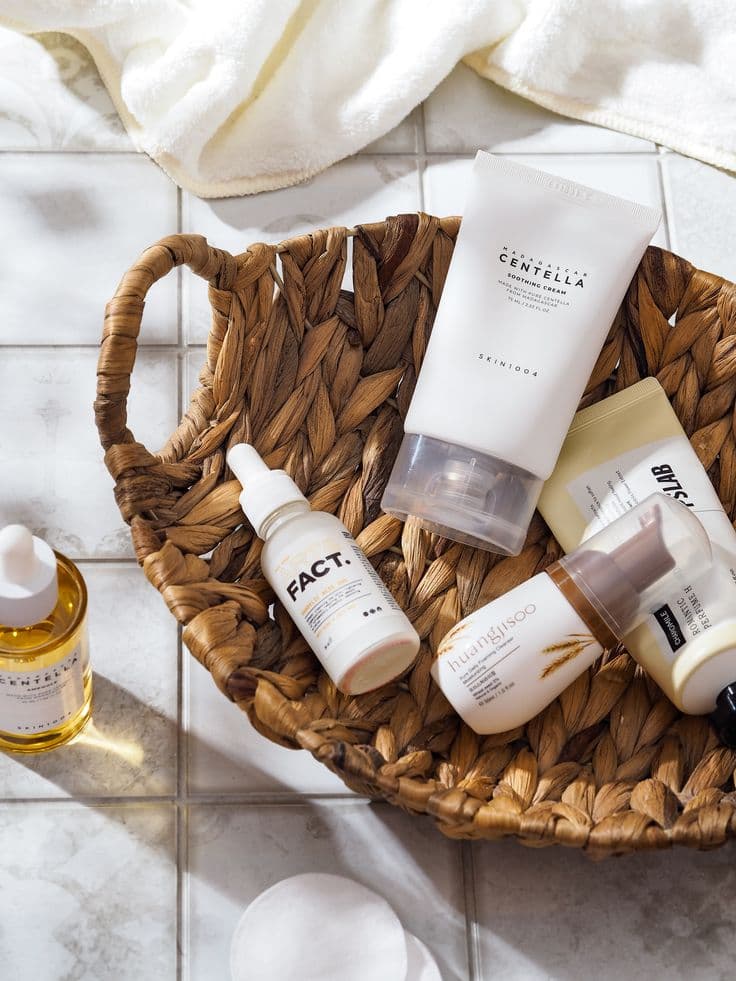
Look for ingredients that replace lost lipids, attract water and calm irritation. You don't need all of them, just a moisturizer that combines a few.
- Ceramides: lipids your barrier is naturally made of; often paired with cholesterol and fatty acids.
- Glycerin and hyaluronic acid: humectants that draw water into the skin.
- Niacinamide: at low to moderate strengths, it can support ceramide production and calm redness.
- Panthenol (provitamin B5): soothing and hydrating.
- Squalane and plant oils: emollients that soften rough, flaky skin.
- Petrolatum: an occlusive that seals moisture in; very effective and rarely irritating.
- Centella asiatica, colloidal oatmeal and allantoin: help calm irritated skin.
A simple skin barrier recovery routine
The goal is to remove irritants and give your skin only what it needs. Keep this routine for at least two weeks before adding anything back.
Pause all actives
Stop retinoids, exfoliating acids, scrubs, peels and high-strength vitamin C. If you use a prescription product, ask your dermatologist before stopping or changing it.
Cleanse gently
Use a mild, fragrance-free cream or gel cleanser with lukewarm water. In the morning, a splash of water may be enough.
Moisturize on damp skin
Apply a barrier-supporting moisturizer with ceramides, glycerin or panthenol while your skin is still slightly damp, morning and night.
Seal at night if very dry
On especially dry or flaky areas, a thin layer of petrolatum or a balm over your moisturizer can reduce water loss. This is the idea behind slugging.
Wear sunscreen every day
UV exposure slows healing. A fragrance-free sunscreen, often a mineral formula for very reactive skin, protects your skin while it recovers.
Reintroduce slowly
Once your skin feels comfortable for a week or two, add back one active at a time, a few nights a week, and watch how your skin responds.
How long does it take to repair your skin barrier?
Mild barrier damage often feels noticeably better within one to two weeks, and many people are back to normal in about two to four weeks. More significant damage, or damage that has built up over months, can take longer.
Signs that you're on the right track include less stinging when you apply moisturizer, fewer flaky patches and skin that feels comfortable for longer after cleansing. Redness is often the last thing to settle, so don't judge progress by color alone.
Skin renews itself gradually, so patience matters. Jumping back into actives the moment the stinging stops is one of the most common reasons the cycle repeats. When you do restart, patch test new products first, and if you see a routine online you want to try, paste the video link into SaveAI to see exactly which products are used and how often before you copy it.
Frequently asked questions
Can a damaged skin barrier cause acne?
It can contribute. A compromised barrier is more prone to inflammation and irritation, and some people notice more breakouts or small bumps while their barrier is damaged. Calming the skin often helps breakouts settle too.
Should I stop using retinol if my skin barrier is damaged?
Yes, it's usually best to pause retinol and other strong actives until your skin feels comfortable again. If it's a prescription retinoid, check with your dermatologist first.
Is Vaseline good for skin barrier repair?
Petrolatum is one of the most effective occlusives for reducing water loss and is rarely irritating. A thin layer over moisturizer at night can help very dry skin, though some acne-prone people prefer to use it only on dry patches.
Can oily skin have a damaged barrier?
Yes. Oily skin can still be dehydrated and irritated, especially if it's been treated with harsh cleansers or lots of acids. It can feel tight and oily at the same time.
This guide is for general information only and isn't medical advice. If you have a skin condition or a reaction to a product, talk to a dermatologist.
More guides in Skincare Basics