Learning how to reapply sunscreen over makeup is the step most routines skip, and it's the one that keeps your protection working through the day. Sunscreen breaks down with sun, sweat and touching your face, so the layer you put on at 8 a.m. isn't doing much by mid-afternoon outdoors. The good news: you don't have to wash off your makeup to top it up.
Key takeaways
- Reapply at least every two hours when outdoors, and right after swimming or heavy sweating.
- Blot oil before reapplying so the new layer goes on evenly.
- Sprays, sticks and cushions are the easiest ways to reapply over makeup.
- SPF powders and setting sprays are useful top-ups, but they rarely deliver the protection on the label.
In this guide
- 01How often should you reapply sunscreen?
- 02How to reapply sunscreen over makeup, step by step
- 03Which sunscreen format is best for reapplying over makeup?
- 04Do SPF powders and setting sprays actually work?
- 05Reapplying for oily, dry and acne-prone skin
- 06What are the most common reapplication mistakes?
- 07Start with a strong first layer
- 08Frequently asked questions
How often should you reapply sunscreen?
Reapply sunscreen at least every two hours when you are outdoors, and immediately after swimming, sweating heavily or towel-drying. Water-resistant formulas only last for the 40 or 80 minutes stated on the label while you are wet.
If you spend most of the day indoors away from windows, one generous morning application is usually enough. Reapply before you head outside for lunch, a walk or your commute home, especially in strong midday sun.
Why does sunscreen wear off at all? Sweat and natural oil break up the film, touching your face and wearing a mask rub it away, and some filters gradually degrade when exposed to sunlight. The label's two-hour guidance is a practical rule that accounts for all of this.
| Your day | When to reapply |
|---|---|
| Indoors, away from windows | Before going outside for long stretches |
| Desk near a sunny window | Midday, since UVA passes through most glass |
| Outdoors (errands, events) | Every two hours |
| Beach, pool or workout | Every two hours and right after swimming or sweating |
How to reapply sunscreen over makeup, step by step
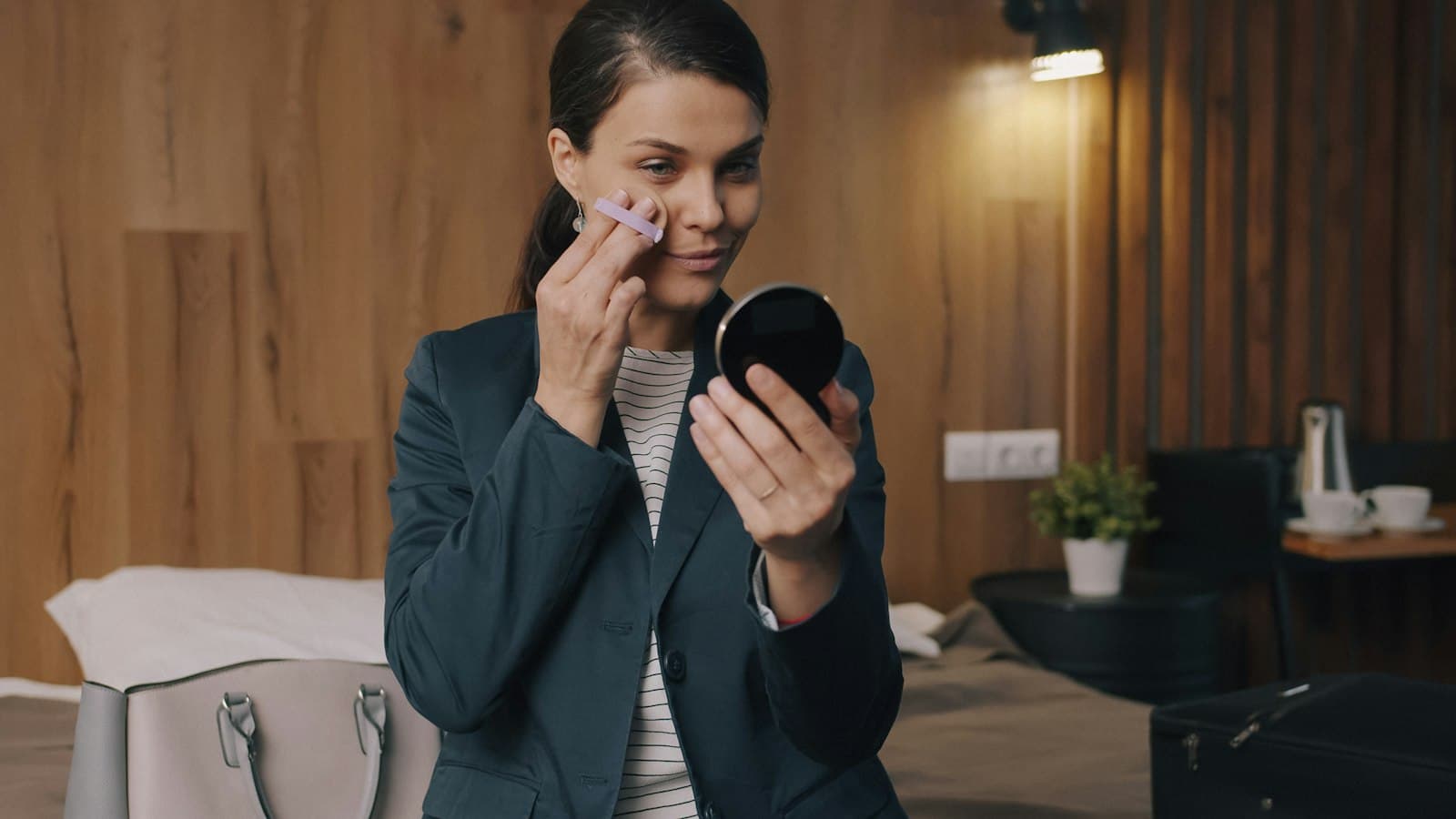
The trick is to remove oil first, then add sunscreen in light, pressed layers so you don't drag your foundation around.
Before you start, wash or sanitize your hands, or use a clean sponge. You'll be touching your face several times a day, and clean tools help keep breakouts away. If you're outdoors in strong sun, step into the shade while you reapply so you can see what you're doing in a mirror.
Blot first
Press a blotting paper or tissue over oily areas. Adding sunscreen on top of oil makes makeup slide and look patchy.
Choose your format
Pick a spray, stick, cushion or a lightweight lotion depending on your makeup and skin type.
Press, don't rub
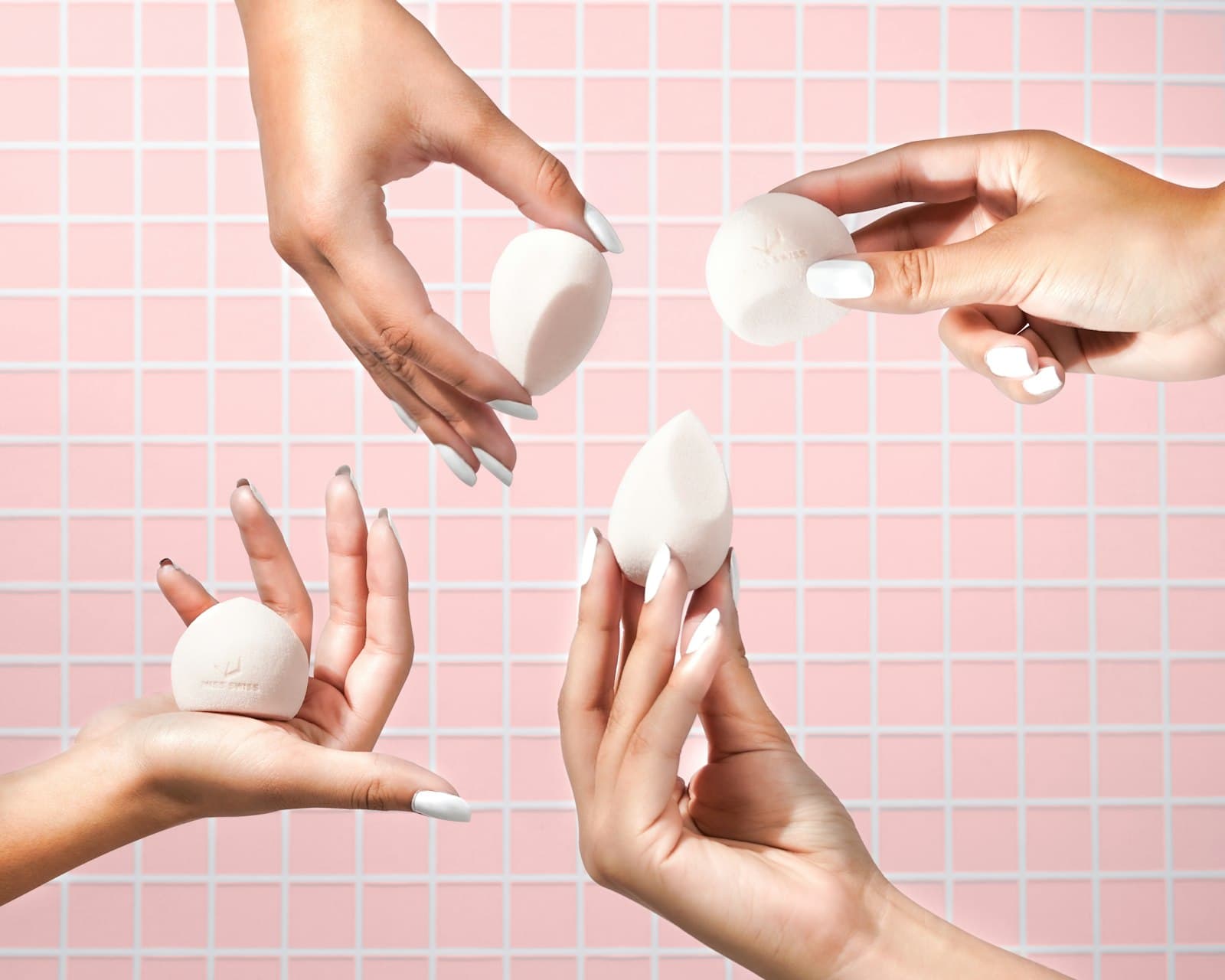
Tap or press product onto the skin with fingertips, a damp sponge or a cushion puff rather than rubbing.
Build in thin layers
Two or three light passes give better coverage than one heavy one and keep makeup intact.
Finish and fix
Let it set, then touch up concealer or powder if needed.
Which sunscreen format is best for reapplying over makeup?
Each format has trade-offs. The most protective option is the one that lets you apply a reasonable amount without ruining your look.
| Format | Best for | Watch out for |
|---|---|---|
| Sunscreen spray or mist | Quick top-ups on full makeup | Hard to apply enough; don't inhale it, so close your eyes and hold your breath |
| Sunscreen stick | Targeted areas like nose, cheeks and forehead | Can drag foundation; use several passes |
| Cushion compact | Adding sunscreen and light coverage together | Tinted shades must match your foundation |
| Lightweight lotion or fluid | Most protective option | Press in with a sponge to avoid streaks |
| SPF powder | Mattifying touch-ups for oily skin | Gives limited protection on its own |
Do SPF powders and setting sprays actually work?
They add some protection, but they almost never give you the full SPF on the label. To match tested SPF you would need far more powder or mist than anyone actually applies.
Where they help
- Easy to use without disturbing makeup
- Control shine on oily skin
- Better than no reapplication at all
Their limits
- Hard to apply enough for the labeled SPF
- Coverage is often uneven
- Loose powders can be inhaled, so apply with a brush and avoid clouds
Reapplying for oily, dry and acne-prone skin
- Oily skin: blot well, then use a matte stick or a mattifying lotion pressed in with a sponge. Finish with a light SPF powder. See our skincare routine for oily skin for more shine-control tips.
- Dry skin: cushions and hydrating mists work well. Avoid piling on powder, which can look flaky. Our skincare routine for dry skin helps build a base that holds up to touch-ups.
- Acne-prone skin: use clean hands or a fresh sponge each time and choose non-comedogenic formulas. Building an acne skincare routine around a sunscreen you like makes daily wear easier.
What are the most common reapplication mistakes?
The biggest mistake is not reapplying at all. After that, these are the habits that quietly weaken your protection.
- Using one quick mist or swipe and calling it done. Build at least two or three passes.
- Skipping areas that get the most sun: the nose, cheekbones, forehead, ears and the back of the neck.
- Reapplying over a layer of sweat and oil, which makes the new sunscreen patchy.
- Using a dirty sponge or puff, which can spread bacteria and trigger breakouts.
- Forgetting your lips. Carry a lip balm with SPF 30 or higher.
- Relying on reapplication alone during peak sun instead of adding shade, a hat and sunglasses.
If you're wearing heavier makeup for an event outdoors, consider a simpler, lighter base that day. It's much easier to reapply sunscreen over a sheer tint than a full-coverage foundation, and your skin will thank you.
Start with a strong first layer
Reapplication works best on top of a full morning dose. Apply about two finger-lengths of sunscreen before makeup, as explained in how much sunscreen to use. Give it a few minutes to set so foundation doesn't pill.
Spotted a creator touching up their SPF over a full beat and want to know what they used? Paste the video link into SaveAI to see each product in the video and when it was applied.
Frequently asked questions
Can you put sunscreen on top of makeup?
Yes. Blot first, then press on a spray, stick, cushion or lightweight lotion in thin layers so your makeup stays in place.
Do I need to reapply sunscreen if I stay indoors?
Usually not if you are away from windows. If you sit near a sunny window or go outside, reapply, since UVA passes through most glass.
Is setting spray with SPF enough?
Not on its own. Most people can't apply enough mist to reach the labeled SPF, so use it as an extra layer, not your only reapplication.
How long does sunscreen last on your face?
Outdoors, plan to reapply about every two hours, and sooner after swimming or sweating. Sunscreen doesn't expire on the skin at a set time indoors, but rubbing and oil wear it down.
This guide is for general information only and isn't medical advice. If you have a skin condition or a reaction to a product, talk to a dermatologist.
More guides in Sun Protection