Most people don't know how much sunscreen to use on their face, and the honest answer is: more than you think. The SPF on the bottle is measured with a generous, precise amount, and a thin layer gives you far less protection. Here is how to measure the right dose without a lab scale.
Key takeaways
- SPF is tested at 2 mg of sunscreen per square centimeter of skin.
- For the face, use about 1/4 teaspoon, or two finger-lengths of lotion.
- For the whole body, use about 1 ounce, roughly a shot glass full.
- Using half the amount can cut your real protection to well below the label's SPF.
In this guide
- 01How much sunscreen should you use on your face?
- 02What is the two-finger rule for sunscreen?
- 03Why does using too little sunscreen matter?
- 04Signs you're not using enough sunscreen
- 05How much sunscreen do you need for your body?
- 06What about sprays, sticks and SPF moisturizers?
- 07Learning sunscreen application from videos
- 08Frequently asked questions
How much sunscreen should you use on your face?
Use about 1/4 teaspoon (roughly 1.25 ml) of sunscreen for your face, or a bit more if you include your neck. That matches the amount used in SPF testing: 2 milligrams per square centimeter of skin.
That number sounds technical, but it is the reason the SPF on your bottle means anything. Labs apply this exact thick layer when they test, so you only get the stated protection if you apply something close to it.
| Area | Recommended amount | Easy visual |
|---|---|---|
| Face | About 1/4 teaspoon | Two finger-lengths of lotion |
| Face and neck | A little over 1/4 teaspoon | Two finger-lengths plus a little extra |
| Each arm | About 1/2 teaspoon | A generous strip along your palm |
| Whole body (adult) | About 1 ounce (30 ml) | Roughly a shot glass full |
What is the two-finger rule for sunscreen?
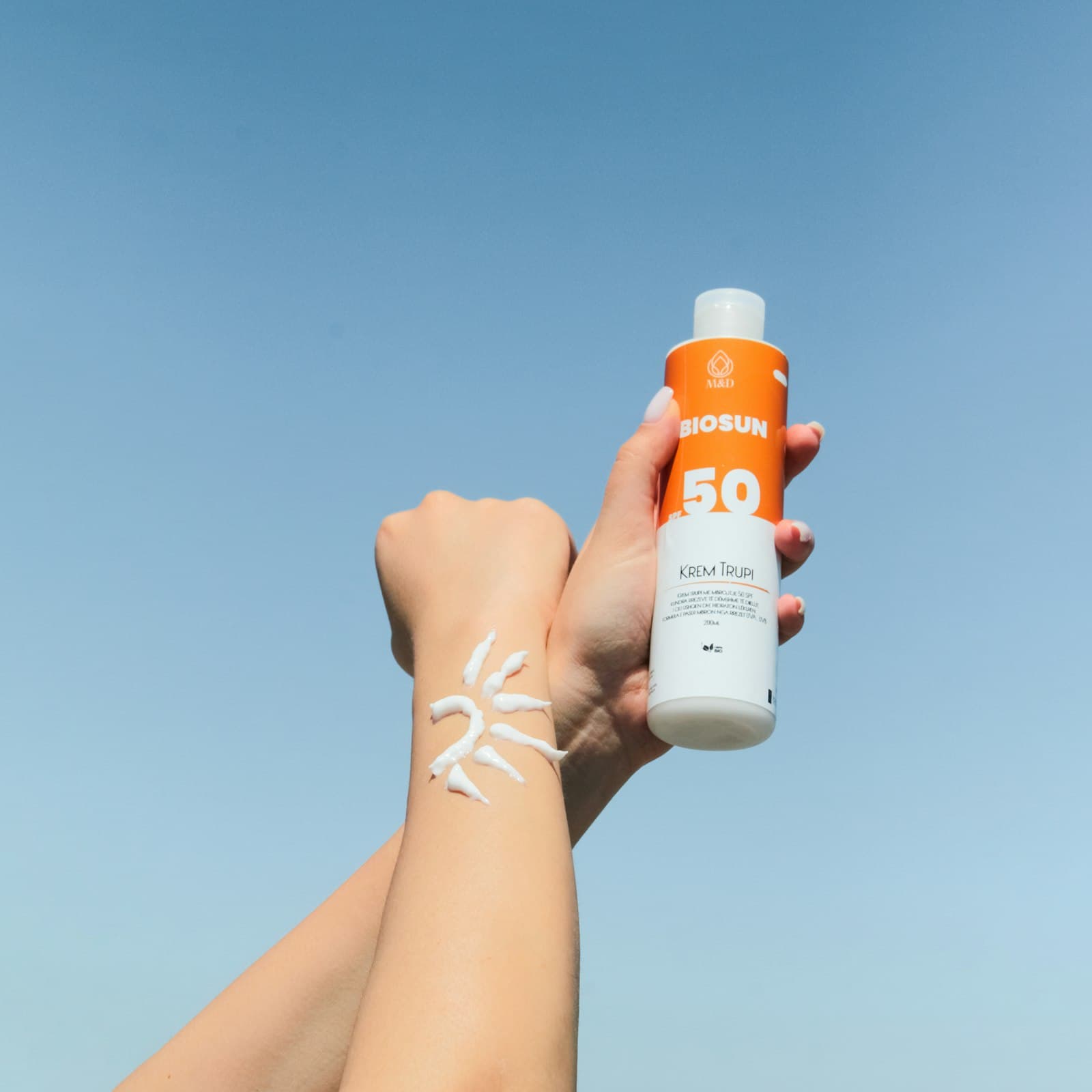
The two-finger rule is a quick way to measure: squeeze a line of sunscreen along the full length of your index and middle fingers, and that's your face and neck dose. It works best with lotions and creams.
Squeeze two lines
Run a line of sunscreen from the base to the tip of your index finger, then your middle finger.
Dot it around your face
Place dots on your forehead, cheeks, nose, chin and neck so it spreads evenly.
Spread, don't rub in hard
Smooth it out gently in one direction to build an even film.
Don't forget the edges
Cover your ears, hairline, jawline, the sides of your neck and around your eyes.
Let it set
Give it a few minutes before applying makeup so it doesn't pill or slide.

Why does using too little sunscreen matter?
Under-application is one of the biggest reasons people burn while wearing sunscreen. Studies consistently find that most people apply only a fraction of the tested amount, so they get much less protection than the label suggests.
The drop isn't small. Using about half the recommended amount can reduce your actual protection to a fraction of the stated SPF. In practice, a thin layer of SPF 50 may perform more like a low-SPF product. Applying enough is the single best upgrade you can make to your routine.
Under-application doesn't only raise your risk of sunburn. Daily UV exposure, especially UVA, is a major driver of fine lines, uneven tone and dark spots. If you are investing in an anti-aging skincare routine or working on fading dark spots, a full dose of sunscreen protects that progress.
Signs you're not using enough sunscreen
You don't need to measure every morning forever. Once you know what a full dose looks like, watch for these clues that you have slipped back into using too little.
- You burn or get pink cheeks even though you “wore sunscreen.”
- Your facial sunscreen lasts many months with daily use.
- You rub it in within seconds and can't see or feel any film at first.
- You get tan lines around your sunglasses or along your hairline.
- Dark spots or melasma keep coming back despite treatment.
If a full dose feels too greasy, too sticky or leaves a white cast, the problem is usually the formula, not the amount. Try a different texture instead of cutting back. Gels and fluids tend to feel lightest, while tinted formulas hide cast on deeper skin tones.
How much sunscreen do you need for your body?
An average adult needs about 1 ounce, or roughly a full shot glass, to cover all exposed skin in a swimsuit. That means a standard 3 ounce bottle holds only about three full-body applications.
- Commonly missed spots: tops of the feet, backs of the knees, ears, the back of the neck, and your scalp along a part.
- Use a lip balm with SPF 30 or higher, since regular sunscreen often isn't pleasant on lips.
- Apply about 15 minutes before going outside so it has time to settle on the skin.
- If a bottle lasts you all summer, you are almost certainly using too little.
What about sprays, sticks and SPF moisturizers?
Other formats make measuring harder, so a few adjustments help you get closer to a full dose.
Do
- Spray until skin glistens, then rub it in
- Swipe a stick back and forth about four times per area
- Use a full two finger-lengths if your moisturizer is your SPF
- Use a lotion as your main layer on your face
Don't
- Spray directly at your face or inhale the mist
- Rely on one quick swipe of a stick
- Count SPF in foundation as your main protection
- Spray outdoors in strong wind, which blows product away
Sunscreen should be the last step of your morning skincare, just before makeup. If you are unsure where it fits, our skincare routine order guide lays out every step. For help picking a formula you'll happily apply in this amount, see how to choose a sunscreen for your face.
Learning sunscreen application from videos
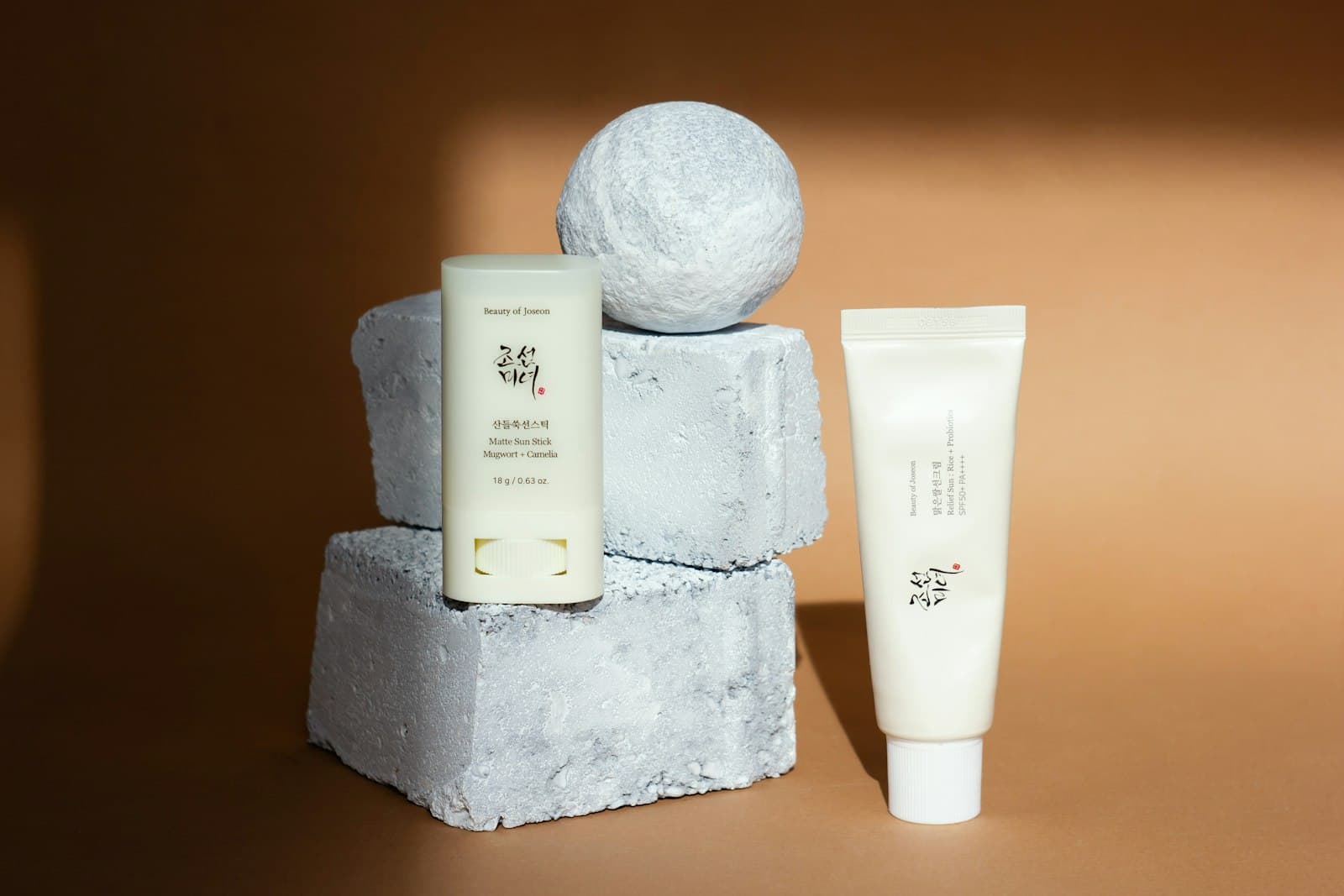
Many creators show their full sunscreen step on camera, which is a great way to see what a real dose looks like. If you want to know the exact product and when it is applied in the routine, paste the video link into SaveAI and get a breakdown of every product in the video. Then make sure you are matching the amount, not just the product.
Frequently asked questions
Is 1/4 teaspoon of sunscreen enough for the face?
Yes, about 1/4 teaspoon covers the average adult face. Add a little more for your neck and ears.
Does the two-finger rule work for the face and neck?
Yes, two full finger-lengths of lotion roughly equals the recommended amount for the face and neck. It is less accurate for very runny fluids, so use a measuring spoon once to calibrate.
Can I apply less sunscreen if it has a higher SPF?
No. SPF is only accurate at the tested amount, and a thin layer lowers protection a lot. Apply a full dose whatever the SPF.
How long should a bottle of sunscreen last?
A 3 ounce bottle holds about three full-body applications. A 50 ml facial sunscreen used daily at the full amount usually lasts around one to two months.
This guide is for general information only and isn't medical advice. If you have a skin condition or a reaction to a product, talk to a dermatologist.
More guides in Sun Protection